
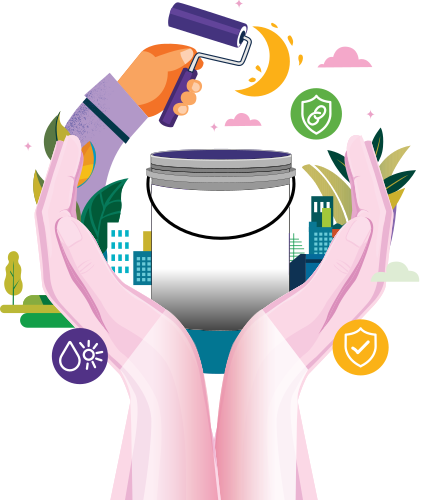


Life cycle thinking guides our product development process, covering raw material selection, formulation design, manufacturing, packaging, use phase and end-of-life considerations. These assessments help identify environmental hotspots and guide interventions such as formulation optimisation, lower-impact material choices, improved resource efficiency and enhanced product durability.
Our Research & Technology teams play a key role in advancing this agenda through robust testing protocols, responsible formulation choices and innovation across product categories. During the year, life cycle assessment continued to be integrated at the design stage for select premium and luxury water-based products, supporting more informed product development decisions.
This approach supports the development of sustainably advantaged products, safer chemistries, longer-lasting coatings and greater use of renewable or bio-based inputs. By embedding sustainability into the innovation pipeline, we aim to strengthen product performance while contributing to lower environmental impact and long-term business resilience.
49,125 tCO2e
GHG footprint reduction through formulation optimisation in FY 2025-26
7.0%
renewable or bio-based raw materials in product offerings, excluding water
39%
revenue contribution from sustainably advantaged products during the year
SDG Goals


Focus Areas
Our product stewardship focus areas are aligned with the Double Materiality study outcomes reflected in the Integrated Report, particularly product stewardship, sustainable product and service offerings, product chemistry, end-of-life management of products and packaging, and technology, innovation and digitisation. These topics guide our approach to responsible product design, safer formulations, lifecycle impact reduction, durable performance, recycled and renewable inputs, and customer-relevant sustainable solutions.
-
Certified sustainable products and service offerings
-
Sustainable optimisation of products and services
-
Elimination of harmful ingredients
-
Renewable and bio-based content in product offerings
-
Durability and long-lasting product performance
-
Sustainably advantaged products
We had undertaken ISO 14040-aligned third-party LCAs covering 53 products across key categories, representing 63% of Company turnover and independently reviewed.