
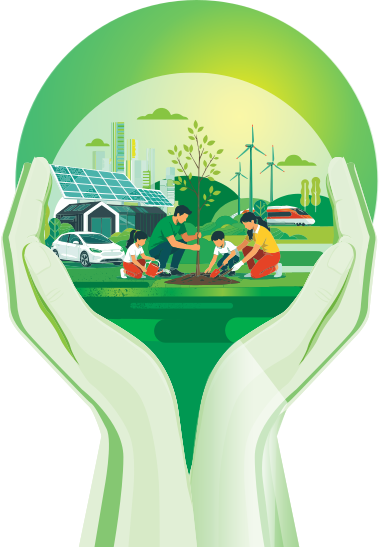


During the year, we continued to balance long-term environmental commitments with operational priorities. Our climate strategy advanced through mitigation and adaptation measures, supported by energy efficiency, renewable electricity, value-chain decarbonisation and climate-risk assessment. We also strengthened water efficiency through reduced non-process consumption, reuse, recycling, conservation and replenishment initiatives. Alongside this, our nature-positive agenda focused on circularity, waste and wastewater management, air emissions control, cleaner operations and biodiversity.
56.5%
Electricity comes from renewable sources at decorative paint manufacturing plants
589%
Water replenished against annual freshwater consumption at our paint manufacturing plants
25,323 tonnes
Recycled plastic used in packaging procured
SDG Goals


Focus Areas
Our environmental focus areas reflect the priorities that are most relevant to our operations, value chain and stakeholders. These areas are aligned with the outcomes of the Double Materiality study reflected in the Integrated Report, while remaining anchored in our ongoing environmental commitments. Together, they guide our efforts to reduce environmental footprint, improve resource efficiency, manage regulatory and operational risks, and support long-term business resilience.
While biodiversity was not assessed as material in the Double Materiality study, we continue to address it through site-level assessments and conservation initiatives.
-

Climate change mitigation
-
Supplier sustainability
-
Water management
-
Air emissions management
-
Waste management
-
Circularity and end-of-life management of products and packaging